PET Sheet Technical Specifications Every Buyer Should Know
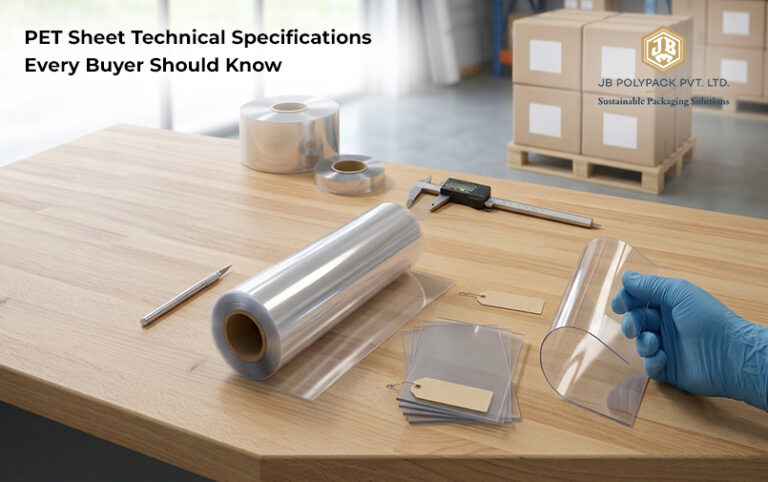
Most PET sheet purchase orders that go wrong do not fail because the buyer picked the wrong material. They fail because the order was placed against an incomplete specification. A thickness was named but a tolerance was not. A roll width was assumed. A food contact requirement was mentioned on a call and never made it onto the datasheet.
We manufacture rigid PET sheets in Surat for thermoformers, packaging converters, and industrial buyers across India and export markets. The buyers who get consistent results from us are the ones who specify precisely. So here is the full set of PET sheet technical specifications we believe every procurement team should have in writing before an order is confirmed.
What PET Sheet Material Actually Is
A polyethylene terephthalate sheet is an extruded flat form of PET, a semi-crystalline thermoplastic polyester. The published polymer data puts its glass transition temperature at roughly 70°C and its melting point near 250°C. Those two numbers explain most of how the material behaves. Below the glass transition it is rigid and dimensionally stable. Heated above it, the sheet softens enough to be formed into trays, punnets, blisters, and containers.
For packaging buyers, PET sheet material comes in two commercial grades. APET is extruded from virgin PET granules and delivers the highest optical clarity. rPET carries recycled content, and in our case is built as a three layer structure with a recycled core between virgin outer layers so the food contact surface stays virgin material. If you are still deciding between the two, our APET vs rPET breakdown covers that decision in depth. Everything below applies to both grades.
PET Sheet Thickness: The Specification That Drives Everything Else
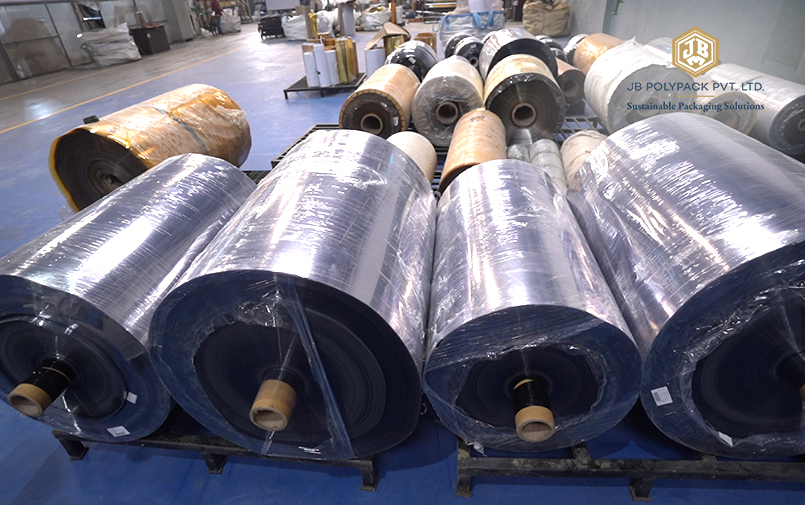
PET sheet thickness determines rigidity, forming behaviour, and your material cost per formed part. Our standard production range runs from 0.25 mm to 3.0 mm, which covers thin gauge food trays at the low end through heavy industrial and fabrication sheet at the top.
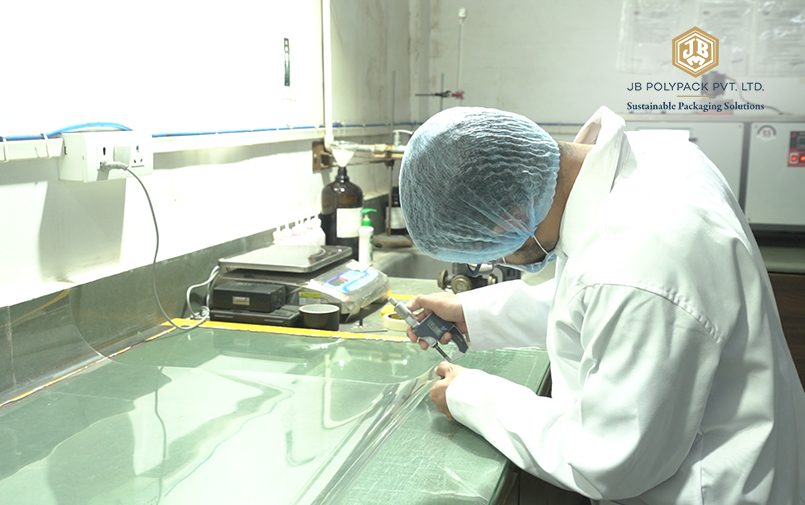
Naming a thickness is only half the specification. The half that buyers skip is tolerance. Every extrusion line holds thickness within a band, and your thermoforming moulds are designed around an expected gauge. A sheet that drifts thin produces weak corners and short shots. A sheet that drifts thick changes heating time and can jam trim tooling. Ask your supplier to state the thickness tolerance on the technical datasheet and to confirm gauge readings on the certificate of analysis for each batch. We provide both, and we would be suspicious of any supplier who resists doing the same.
The second half of the thickness conversation is where in the sheet the measurement is taken. Edge to centre variation across the web matters as much as batch to batch variation, because uneven gauge across the width forms unevenly in the mould.
PET Film Sheets vs Rigid PET Sheet: What the Terms Mean on a Datasheet
Buyers searching for PET film sheets and buyers searching for rigid PET plastic sheet are often looking at the same product. The industry uses the terms loosely, and the distinction is gauge and delivery format rather than chemistry.
In standard thermoforming practice, thin gauge material supplied on rolls and fed continuously into forming machines is commonly called film, while heavier material above roughly 3 mm is handled as cut sheet and loaded individually. Between those points, terminology varies by region and by industry. A pharma converter may call a 0.3 mm roll a film. A signage fabricator may call a 2 mm cut panel a sheet.
Why this matters on a purchase order: if your datasheet says film and your forming line expects cut sheet, or the reverse, you have a format mismatch that no material property can fix. Specify the delivery format explicitly. Roll or cut sheet, and if roll, the core diameter and maximum roll weight your handling equipment accepts.
PET Sheet Density and Yield: The Number Behind Your Cost Per Part
PET sheet density is the specification most buyers ignore and the one that quietly sets your material economics. Amorphous PET sits in the region of 1.33 to 1.40 g/cm³ depending on grade and processing, per the same published polymer data referenced above, with crystalline regions running higher.
Density converts thickness into weight, and weight is what you pay for. The arithmetic is simple. Sheet weight per square metre equals thickness in millimetres multiplied by density in g/cm³ multiplied by 1,000. At a density of 1.35 g/cm³, a 0.5 mm sheet weighs about 675 grams per square metre. Run that against your part layout and you get grams per formed part, which is the number your costing should actually be built on rather than price per kilogram alone.
This is also why density belongs on the datasheet you approve. Two quotes at the same price per kilogram are not the same price per part if the materials differ in density or if one supplier runs consistently at the top of the thickness tolerance band. Yield per kilogram is the comparison that protects you.
PET Sheet Size and Format: Rolls, Widths, and Cut Dimensions
PET sheet size is a machine compatibility specification before it is anything else. Thermoforming lines index material at a fixed width, and the sheet must match the rail spacing of your specific machine.
For roll supply, your specification should state the web width and its tolerance, the core inner diameter, the maximum outer diameter or roll weight your unwind station handles, and the winding direction if your line is sensitive to it. For cut sheet supply, state length, width, and squareness requirements, along with stacking and palletising limits for your stores.
We slit and cut to order rather than pushing standard dimensions, because a converter running a 760 mm machine gains nothing from an 800 mm stock width except trim waste they paid for. Width is part of the yield equation, and it should be specified to your line rather than accepted from a stock list.
Thermoforming PET Sheet: The Processing Window to Confirm
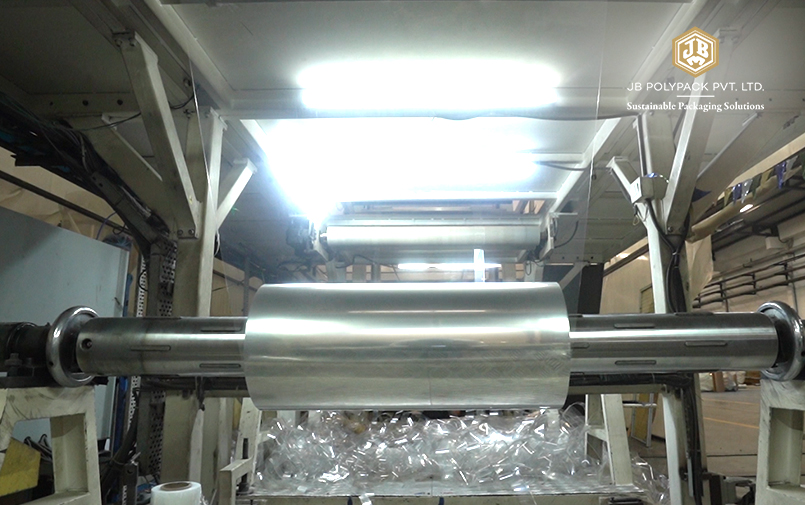
If your sheet is destined for forming, the processing specifications belong on your checklist alongside the material ones. Published forming temperature guidance for APET sheet recommends sheet temperatures of approximately 270°F to 310°F, which is roughly 132°C to 154°C, with even heating across the sheet and care not to overheat. Sheet formed too cold comes off the mould stressed and brittle. Sheet formed too hot loses gauge control in the draw.
What this means for procurement rather than production: confirm with your supplier that the sheet is extruded for thermoforming, ask whether it has been surface treated on one or both sides if you print or laminate, and run a trial batch on your own line before committing to volume. A thermoforming PET sheet that performs on one machine configuration can behave differently on another, and a small trial is cheaper than a rejected production run. Our thermoforming products are formed in house from the same sheet lines we sell from, so the forming behaviour we quote is behaviour we run daily ourselves.
Clarity and Surface Specifications for Clear PET Sheet
For retail facing packaging, a clear PET sheet is usually the point of choosing PET at all. Clarity on a datasheet is expressed through light transmission and haze, and both should appear on the certificate of analysis for your batch rather than being taken on trust from a brochure. Surface specifications sit alongside optical ones. Gloss level, scratch handling during transport, and interleaving or masking requirements should all be stated if your application is display grade.
We have written separately about how clarity and strength interact with thickness selection, so we will not repeat that ground here. The specification lesson is short: put the optical requirements in writing with the test method named, and require batch level reporting.
Food Contact and Compliance Specifications
For food applications in India, the material specification has a regulatory layer that belongs on the purchase order itself. The Packaging Regulations 2018 issued under FSSAI reference IS 12252 as the Indian Standard for polyalkylene terephthalates in food contact, with overall migration testing carried out under IS 9845. If your packaging touches food, your supplier should be able to show conformance to these standards through accredited laboratory testing.
Recycled content adds a second layer. FSSAI’s FCM-rPET guidelines require that recycled PET used as a food contact material conform to IS 12252 and be produced through an authorised decontamination process, with conventional wash and melt recycling explicitly not permitted for food contact. So if a supplier offers you food grade rPET sheet, the questions to ask are which recycling process produced the core material and what documentation supports the food contact claim. Our compliance documentation is available on our certifications page, and we will share batch level test reports with any serious enquiry.
Matching Specifications to PET Sheet Applications
Different PET sheet applications pull on different parts of the specification. Blister packaging for electronics and FMCG products prioritises clarity, forming detail, and gauge consistency at thin sections. Food trays and punnets add the food contact layer and often the rPET documentation. Retail display work pushes optical and surface specifications hardest. Industrial packaging and fabrication work at the heavier end of the gauge range cares most about flatness, cut accuracy, and impact strength.
The practical takeaway is that a specification sheet is application specific. A datasheet approved for one product line should not be assumed to cover the next one.
The Specification Checklist We Recommend Before You Order
Before confirming a PET sheet order, get the following in writing from your supplier:
-Grade and structure: APET or rPET, and for rPET, the layer construction and recycled content percentage
-Thickness with stated tolerance, plus cross web gauge control
-Density, so you can verify yield per kilogram against your part costing
-Format and size: roll or cut sheet, width with tolerance, core diameter, roll weight limits or cut dimensions
-Forming suitability and any surface treatment
-Optical values with test methods, reported per batch for display grade work
-Food contact conformance to IS 12252 with IS 9845 migration testing where applicable, and process authorisation documents for food grade recycled content
-Certificate of analysis committed for every batch, and a trial quantity before volume
Any supplier worth a long term contract will answer every line on that list without hesitation. If you would like our datasheet against your application, or a sample batch to run on your own line, contact us with your thickness, format, and end use and we will respond with specifics rather than a brochure.
FAQs
What is the density of PET sheet?
Amorphous PET, the form used for clear packaging sheet, has a published density in the region of 1.33 to 1.40 g/cm³. Density matters to buyers because it converts sheet thickness into weight per square metre, which determines how many formed parts a kilogram of material yields.
What thickness options are available in PET sheets?
Commercial PET sheet is produced across a wide gauge range. Our own production runs from 0.25 mm to 3.0 mm. Thin gauges serve food trays and blister packaging, while heavier gauges serve industrial packaging and fabrication. The thickness tolerance is as important as the nominal figure and should be stated on the datasheet.
What is the difference between PET sheet and PET film?
The chemistry is identical. The terms describe gauge and format. Thin material supplied on rolls for continuous forming is commonly called film, while heavier material, particularly above about 3 mm, is supplied and handled as cut sheet. Always specify the delivery format on the purchase order rather than relying on the terminology.
Is PET sheet safe for food packaging in India?
Yes, provided it conforms to the standards referenced under the FSSAI Packaging Regulations 2018. For PET that means IS 12252, with overall migration tested under IS 9845. Food grade recycled PET additionally requires an authorised decontamination process under FSSAI’s FCM-rPET guidelines. Ask your supplier for accredited test reports rather than a general food grade claim.
What temperature is used for thermoforming PET sheet?
Published industry guidance for APET recommends sheet temperatures of roughly 132°C to 154°C for proper forming, with even heating across the sheet. Forming too cold produces stressed, brittle parts, and forming too hot causes loss of gauge control. Trial runs on your own machine remain the reliable way to confirm the window.
What should I check on a PET sheet datasheet before ordering?
Check grade and structure, thickness with tolerance, density, format and size details, forming suitability, optical values with test methods, and food contact documentation where relevant. Then require a certificate of analysis for every batch so the datasheet values are verified on the material you actually receive.