Understanding Thickness, Clarity, and Strength in PET Sheets
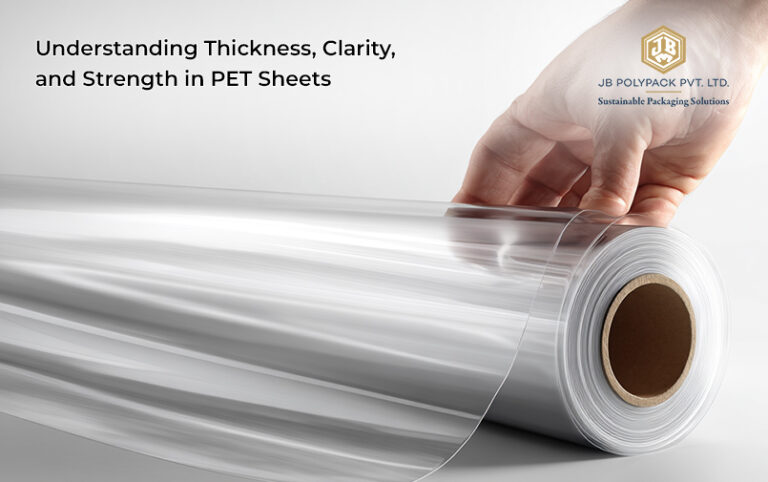
In industries where packaging quality directly affects product presentation and protection, material selection becomes critical. One of the most widely used materials in modern packaging manufacturing is the PET sheet.
From bakery packaging and food trays to electronics packaging and medical blister packs, PET sheets are used across industries because they combine clarity, strength, and thermoforming capability.
For manufacturers, packaging converters, and brand owners, understanding factors like PET sheet thickness, optical clarity, and mechanical strength is essential before selecting the right material.
This guide explains how PET sheets work, what determines their performance, and how businesses can choose the right sheet specifications for their packaging needs.
What is a PET Sheet?
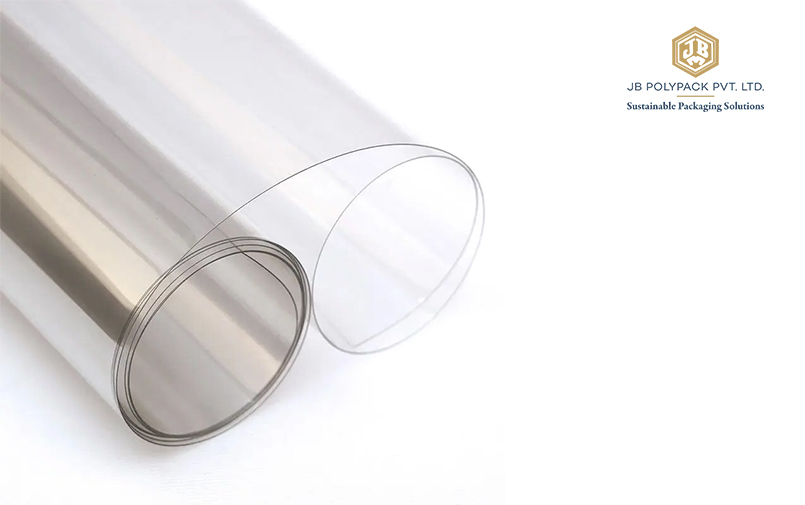
A PET sheet is a plastic sheet made from polyethylene terephthalate (PET), a widely used thermoplastic polymer known for its durability, transparency, and food-safe properties.
PET sheets are commonly used in packaging applications where clarity and strength are both required. Unlike many other plastic materials, PET offers a combination of:
• High transparency
• Structural strength
• Good thermoforming capability
• Food-safe material properties
• Recyclability
These properties make PET one of the preferred materials for modern packaging manufacturing.
Many packaging manufacturers convert PET film sheets into containers, trays, and packaging structures using thermoforming processes.
Because PET can be heated and molded easily, it is particularly suitable as a PET plastic sheet for thermoforming, enabling manufacturers to create precise packaging shapes.
Why PET Sheet Thickness Matters in Packaging
One of the most important factors that determines packaging performance is PET sheet thickness.
The thickness of a sheet directly affects how the final packaging performs in terms of strength, durability, and forming behavior.
Structural Strength
Thicker sheets provide greater rigidity and load-bearing capacity. This is important for packaging products such as:
• bakery trays
• food containers
• electronics packaging
• industrial protective packaging
When thermoformed properly, a PET sheet for thermoforming can produce packaging that holds its shape while protecting the product inside.
Formability During Thermoforming
Packaging manufacturers must balance strength and formability when selecting sheet thickness.
If the sheet is too thin:
• it may tear during forming
• structural integrity may be weak
If the sheet is too thick:
• forming becomes difficult
• material cost increases
Choosing the correct PET sheet thickness ensures that thermoforming processes run smoothly while producing durable packaging.
Transportation and Stacking Performance
Packaging made from PET clear plastic sheet must maintain structural integrity during storage and logistics.
Proper thickness ensures:
• containers do not collapse during stacking
• trays maintain their shape
• packaging remains stable during transport
For manufacturers producing thermoformed packaging, selecting the right thickness is essential to maintain packaging performance.
The Importance of Clarity in PET Sheets
One of the most valuable properties of PET is its optical clarity.
Many packaging applications require a clear PET sheet so that the product inside remains visible to consumers.
This transparency is especially important in retail environments where product visibility influences purchase decisions.
A PET transparent sheet allows brands to display food products such as:
• cakes and pastries
• snacks
• fresh fruits
• confectionery items
Clear packaging builds consumer trust by allowing customers to visually inspect the product before buying.
High-quality PET clear plastic sheet materials are manufactured to provide excellent light transmission and minimal haze.
This optical clarity ensures packaging looks clean, premium, and attractive on store shelves.
Strength and Durability of PET Sheets
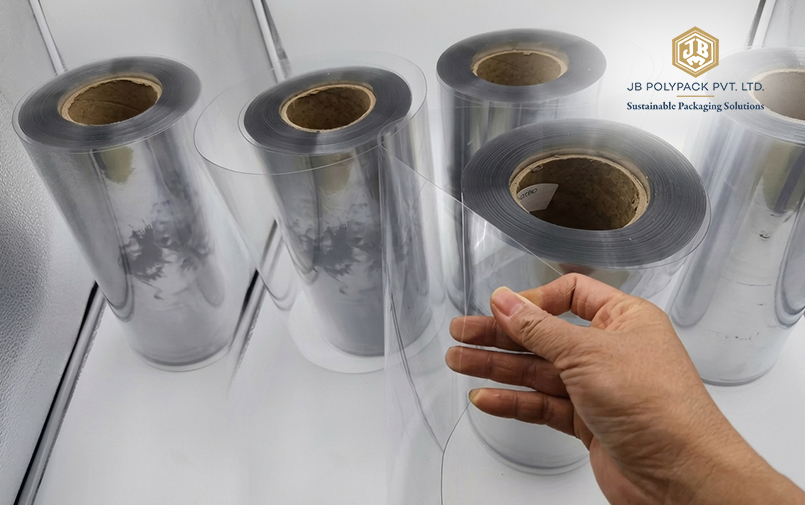
Beyond clarity and thickness, PET sheets are valued for their mechanical strength.
Compared to many other plastic materials, PET provides strong resistance to impact and deformation.
Packaging produced through PET sheet thermoforming can withstand handling during manufacturing, transportation, and retail display.
The strength of PET sheets helps prevent:
• packaging collapse
• product damage during logistics
• cracking or tearing during forming
These properties make PET a preferred material for packaging that must remain durable throughout the supply chain.
PET Sheet Thermoforming: How Packaging is Created
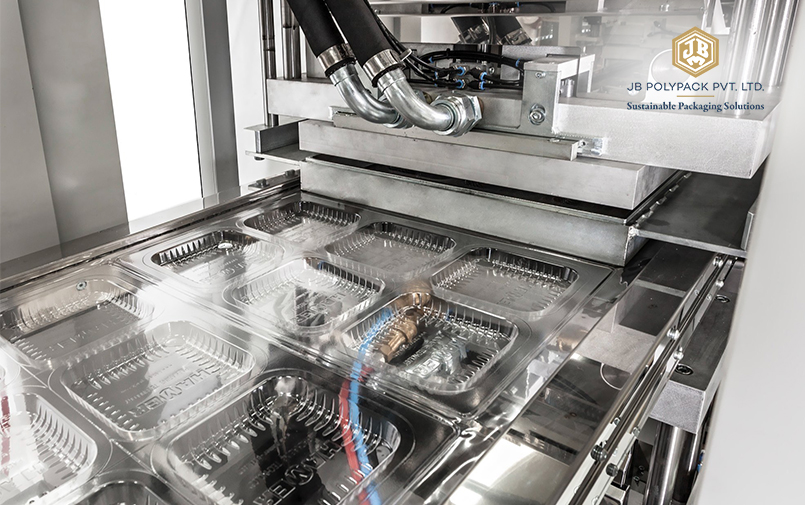
Thermoforming is one of the most common processes used to convert PET sheets into finished packaging products.
In PET sheet thermoforming, sheets are heated until they become flexible and then molded into specific shapes using tools or molds.
The process typically involves the following steps:
- Heating the PET sheet
- Forming the sheet over a mold
- Cooling to retain the shape
- Trimming excess material
The result is packaging that fits the product precisely.
Using a PET sheet for thermoforming allows manufacturers to create packaging with:
• precise dimensions
• smooth surfaces
• high clarity
• strong structural integrity
Thermoformed packaging is widely used across food, consumer goods, and industrial sectors.
How to Choose the Right PET Sheet for Thermoforming Applications
When businesses source a PET sheet for thermoforming, the decision goes far beyond simply choosing a plastic sheet. The wrong specification can lead to forming defects, weak packaging, or increased production waste.
Experienced packaging converters usually evaluate several technical parameters before selecting a supplier.
Thickness compatibility with molds
Every thermoforming mold is designed for a specific PET sheet thickness range. If the sheet thickness varies across batches, manufacturers may experience:
• uneven forming
• thin corners in trays
• structural weakness in final packaging
Consistent sheet thickness ensures predictable forming behavior and reduces material wastage during production.
Clarity required for product visibility
For retail packaging such as bakery trays or fruit containers, optical clarity is extremely important.
High-quality PET transparent sheet materials maintain excellent light transmission with minimal haze. This ensures the final packaging remains visually appealing when displayed on store shelves.
Converters often prefer a PET clear plastic sheet with stable clarity levels because inconsistent transparency can affect packaging aesthetics.
Thermoforming temperature stability
PET sheets must soften evenly during heating to avoid forming defects.
A well-manufactured PET plastic sheet for thermoforming maintains consistent heating behavior across the sheet surface. This ensures smooth forming without cracking, tearing, or uneven thickness in the final product.
Manufacturers purchasing PET sheet for thermoforming usually test small batches before scaling production to ensure compatibility with their forming machines.
Industries That Use PET Sheets
PET sheets are used across multiple industries due to their versatility and performance characteristics.
Food Packaging Industry
The food industry is one of the largest users of PET sheet for thermoforming applications.
Common packaging products include:
• bakery trays
• fruit containers
• takeaway packaging
• snack packaging
Food manufacturers prefer clear PET sheet materials because they allow customers to see the product while keeping it protected.
Bakery and Confectionery Packaging
Bakery packaging requires materials that offer both clarity and structural strength.
PET packaging helps protect delicate products such as cakes and pastries.
A PET transparent sheet allows bakery items to remain visible while maintaining packaging durability.
Electronics Packaging
Electronics products require protective packaging that prevents physical damage.
Thermoformed trays made from PET plastic sheet for thermoforming are commonly used to hold components securely.
Medical Packaging
Medical packaging often requires sterile, transparent packaging formats.
PET sheets are used to manufacture blister packaging and medical trays due to their clarity and strength.
Consumer Goods Packaging
PET sheets are also used for packaging cosmetics, tools, toys, and consumer electronics.
Thermoformed packaging provides product protection while maintaining visual presentation.
Benefits of Using PET Sheets for Packaging
Businesses choose PET sheets because they provide several practical advantages.
High Transparency
A clear PET sheet offers excellent optical clarity, making products visible to consumers.
Good Thermoforming Performance
Manufacturers prefer PET sheet thermoforming because the material forms consistently without cracking.
Strong Mechanical Properties
PET provides durability and impact resistance for packaging applications.
Lightweight Packaging
Compared to many other packaging materials, PET sheets provide strength while remaining lightweight.
Recyclability
PET is widely recyclable, making it suitable for industries seeking more sustainable packaging options.
How PET Sheets Are Manufactured and Why the Process Matters
For businesses that rely on thermoformed packaging, the quality of the PET sheet directly determines the performance of the final product. Packaging strength, transparency, and forming consistency all begin at the sheet manufacturing stage.
At JB Polypack, PET sheets are produced through a controlled extrusion process designed to ensure uniform thickness, clarity, and thermoforming performance.
Raw Material Selection
The process begins with carefully selected PET raw materials. The quality of the base resin plays a major role in determining the optical clarity and structural strength of the final sheet.
Using high-quality raw materials ensures that the PET clear plastic sheet maintains:
• consistent transparency
• good structural integrity
• stable thermoforming behavior
This becomes especially important for applications where clear PET sheet packaging is required to display food products or retail items.
Sheet Extrusion Process
During production, PET resin is melted and extruded through specialized machinery that forms the material into flat sheets.
Precise control of temperature, pressure, and cooling conditions ensures that the PET sheet thickness remains consistent across the entire sheet width.
Uniform thickness is critical for buyers because inconsistent sheets can cause problems during PET sheet thermoforming, such as uneven tray walls or weak corners.
A controlled extrusion process ensures that every PET sheet for thermoforming behaves predictably during forming operations.
Clarity Control and Surface Quality
Packaging used in retail environments requires high optical clarity.
During sheet manufacturing, special attention is given to maintaining transparency so that the final PET transparent sheet provides excellent visibility of the packaged product.
High-quality extrusion also ensures smooth surface finish and low haze levels. This improves the performance of PET film sheets when they are converted into packaging products.
For industries like bakery packaging and food containers, this clarity directly impacts product presentation on store shelves.
Cooling and Dimensional Stability
Once the sheet is formed, it is cooled under controlled conditions to maintain dimensional stability.
Proper cooling ensures that the sheet retains its structure and does not develop internal stresses that could cause cracking during forming.
This stability is essential when the material is used as a PET plastic sheet for thermoforming, where consistent heating and forming behavior are required.
Quality Control and Thickness Verification
Before the sheets reach customers, they undergo strict quality checks to ensure that thickness, clarity, and mechanical strength meet required specifications.
For thermoforming companies, consistent PET sheet thickness helps maintain stable production runs and reduces material waste.
Reliable sheet quality also ensures that the PET sheet for thermoforming produces packaging that remains strong during transportation and handling.
Why Manufacturing Quality Matters for Buyers
For packaging manufacturers and converters, the production quality of PET sheets has a direct impact on operational efficiency.
High-quality sheets help businesses achieve:
• smoother PET sheet thermoforming processes
• stronger finished packaging products
• consistent transparency for retail packaging
• reduced production defects and material waste
When the PET sheet is manufactured with tight process control, packaging converters can maintain stable production cycles while producing packaging that meets both structural and visual requirements.
For industries that depend on reliable thermoformed packaging, working with a manufacturer that prioritizes process control and material consistency becomes a critical advantage.
For packaging converters and product manufacturers, this consistency reduces production issues such as uneven forming or structural weakness.

What Packaging Manufacturers Look for in PET Sheet Suppliers
Packaging converters and thermoforming companies rarely choose PET sheet suppliers based only on price. Production reliability and material consistency are far more important.
When buyers evaluate PET sheet suppliers, they typically look for the following capabilities.
Consistent sheet thickness across batches
In thermoforming operations, even small thickness variations can create forming issues.
Reliable suppliers maintain strict production control so that every batch of PET sheet delivers the same thickness profile. This consistency allows converters to maintain stable production runs.
Stable clarity for transparent packaging
Many packaging applications require high-clarity materials such as clear PET sheet or PET transparent sheet.
Suppliers must ensure the sheet maintains:
• uniform transparency
• low haze levels
• smooth surface finish
These properties are essential for packaging used in food, bakery, and retail display applications.
Material suitability for thermoforming lines
A good PET plastic sheet for thermoforming must perform consistently across different forming machines.
Converters usually prefer suppliers whose sheets demonstrate:
• stable heating behavior
• good mold replication
• strong edge strength after forming
Reliable PET sheet thermoforming performance reduces production downtime and improves packaging quality.
What Buyers Should Look for When Purchasing PET Sheets
Companies purchasing PET sheets typically evaluate several technical factors before selecting a supplier.
Thickness Consistency
Consistent PET sheet thickness ensures predictable thermoforming results and stable packaging performance.
Optical Clarity
A high-quality PET clear plastic sheet should offer excellent transparency with minimal haze.
Thermoforming Compatibility
Sheets must be suitable for PET sheet thermoforming processes without tearing or deforming.
Surface Quality
Smooth surfaces improve final packaging appearance and reduce production defects.
Reliable Supply
Packaging manufacturers require suppliers who can maintain consistent product availability.
For buyers working with PET plastic sheet for thermoforming, selecting a reliable manufacturer is essential to maintaining production efficiency.
The Future of PET Sheet Packaging
As packaging technology evolves, PET sheets continue to play an important role in modern packaging systems.
Advances in extrusion and thermoforming technology are improving material efficiency while maintaining high clarity and strength.
Industries increasingly rely on PET sheet for thermoforming because it combines durability, versatility, and recyclability.
With growing demand for transparent packaging and protective packaging solutions, PET sheets are expected to remain a core material in packaging manufacturing.
Common Problems Buyers Face When Using Poor-Quality PET Sheets
Businesses that purchase low-quality PET sheets often encounter production problems that directly impact packaging performance and manufacturing efficiency.
Understanding these risks helps buyers make better sourcing decisions.
Uneven thermoforming results
When sheet thickness varies across the surface, thermoforming machines may produce trays with inconsistent wall thickness.
This can lead to:
• weak packaging corners
• trays collapsing during stacking
• product damage during transportation
Consistent PET sheet thickness is critical for maintaining packaging strength.
Loss of transparency in packaging
If the raw sheet has high haze levels, the final packaging may appear cloudy.
For products that rely on visual presentation, poor clarity reduces shelf appeal.
Manufacturers producing retail packaging prefer PET clear plastic sheet materials that maintain excellent transparency after forming.
Cracking during forming
Low-grade sheets sometimes develop cracks or stress marks during PET sheet thermoforming.
This occurs when the sheet lacks proper material stability during heating.
Using high-quality PET sheet for thermoforming ensures smoother forming behavior and better packaging durability.
Conclusion
The performance of thermoformed packaging depends heavily on the quality of the raw material used.
Understanding factors such as PET sheet thickness, clarity, and strength helps manufacturers select the right materials for their packaging needs.
A high-quality PET sheet provides the balance of transparency, structural integrity, and thermoforming compatibility required for modern packaging applications.
From food packaging and bakery containers to electronics trays and medical packaging, PET sheets continue to support industries that require reliable and visually appealing packaging solutions.
Selecting the right PET sheet manufacturer ensures that packaging performs consistently throughout production, transportation, and retail display.
PET Sheet Selection and Thermoforming FAQs
What thickness PET sheet is used for thermoforming?
The thickness of PET sheet used for thermoforming typically ranges from 0.2 mm to 1 mm, depending on the packaging application. Thin sheets are used for food trays and bakery containers, while thicker sheets are used for protective industrial packaging.
What is PET sheet used for in packaging?
PET sheet is widely used to manufacture thermoformed packaging such as food containers, bakery trays, blister packaging, and product trays. Its transparency and strength make it suitable for retail packaging where product visibility is important.
Why is clear PET sheet preferred for food packaging?
A clear PET sheet allows consumers to see the product inside the packaging while protecting it from contamination and physical damage. This visibility improves product presentation and builds consumer trust.
What is PET sheet thermoforming?
PET sheet thermoforming is a manufacturing process where PET sheets are heated and molded into packaging shapes such as trays, containers, and blister packs using specialized molds.
Is PET sheet recyclable?
Yes. PET sheet is recyclable and widely accepted in plastic recycling systems. Many packaging manufacturers use recycled PET materials to produce new sheets and packaging products.
What industries use PET sheets?
PET sheets are used across several industries including food packaging, bakery packaging, electronics packaging, medical packaging, and consumer goods packaging because of their clarity and strength.
What properties make PET sheet suitable for packaging?
PET sheet is commonly used for packaging because it provides high transparency, good strength, lightweight properties, and excellent thermoforming capability.