PET Strap Specifications Explained: Width, Thickness & Breaking Strength
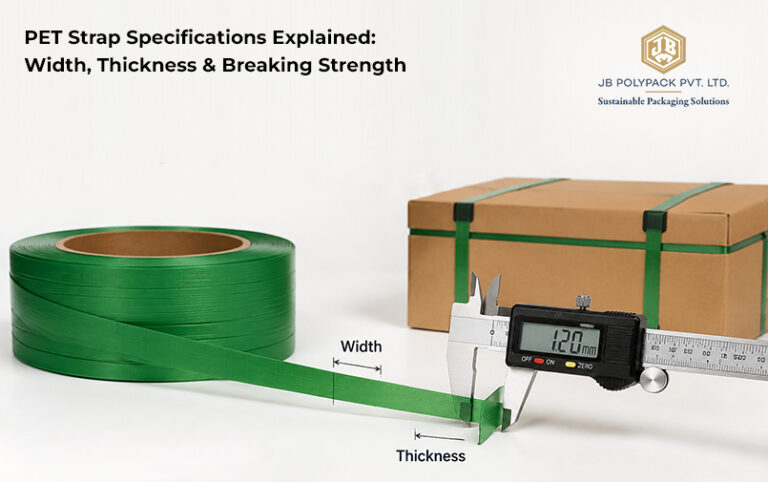
Strong. Light. Rust free. Weatherproof. Recyclable. Ask anyone in packaging why PET straps have taken over from steel and you will hear some version of that list within the first minute. The list is accurate. It is also useless on a purchase order. Nobody has ever specified a strap as “strong,” and no strapping machine has ever accepted “durable” as an input. The moment you move from choosing PET to actually buying it, the one word answers stop working and the numbers take over. Width. Thickness. Breaking strength. Elongation. Those four figures decide whether the strap performs on your loads or fails on the highway, and they deserve more attention than they usually get.
We produce PET straps at JB Polypack for buyers across industries, and here is how we would walk you through the specifications if you were sitting across the table from us.
The Four Numbers That Define a Polyester PET Strap
Everything else on a strap datasheet, from surface finish to coil length, exists to support those four figures. When a buyer sends us an enquiry with all four specified, we can quote in minutes. When an enquiry says “strap for pallets,” the real conversation has not started yet.
The four numbers are also connected. Width multiplied by thickness gives you the cross section, and the cross section carries the load. Two straps with the same breaking strength but different cross sections will behave differently in your tensioner, your sealer, and your dispenser. Which is why you specify all four rather than shopping on breaking strength alone.
Width and Thickness: Where Strength Actually Comes From
Our standard widths are 12 mm, 16 mm, 19 mm, and 25 mm. That lineup covers the working range of most strapping operations in India, from carton bundling at the narrow end to heavy duty PET strap applications at 25 mm.
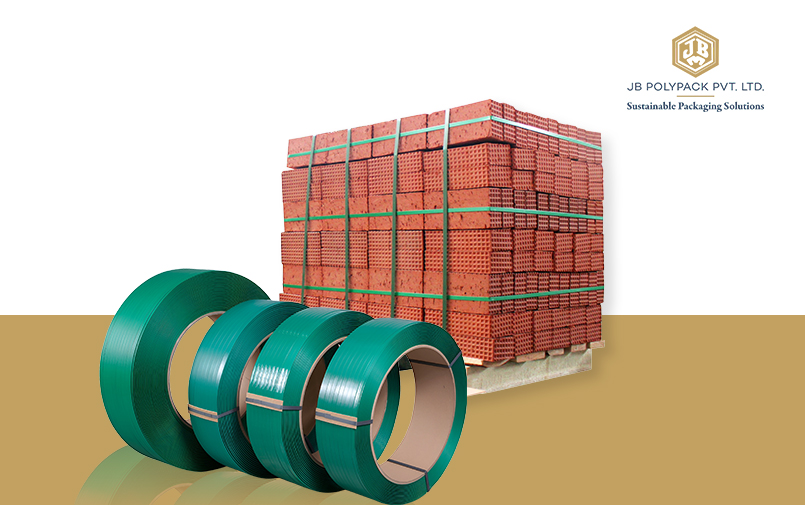
Width does two jobs. It carries load through cross section, and it spreads that load across the package edge. A narrow strap at high tension bites into corners. A wider strap distributes the same tension over more surface. If your product has soft edges, bricks and tiles being the obvious cases, width protects the product as much as it secures it.
Thickness is the quieter half of the cross section, and it is where corner cutting hides. Two rolls can both be labelled 16 mm and differ meaningfully in gauge, which means they differ in breaking strength, in metres per coil, and in how they feed through your tooling. Thickness belongs on the technical datasheet in millimetres with a tolerance, and your incoming inspection should check it. A micrometer costs less than one failed dispatch.
One more compatibility point that gets missed. Your tensioners, sealers, and automatic strapping machines are built for specific width and thickness windows. Confirm the strap dimensions against the machine manual before ordering, whichever PET strap supplier you buy from. A strap that jams the sealer helps nobody, whatever its strength rating says.
Breaking Strength vs PET Strap Load Capacity
Here is the distinction that separates informed buyers from the rest. Breaking strength is the force at which the strap itself ruptures in a straight tensile test. Our production spans a strength range of 800 to 2200 N across the width lineup. Ask us for the datasheet figure against the exact width and gauge you are buying, because a range across a product family is a starting point rather than a specification for your order.
PET strap load capacity is a different question. The strap in service never works alone. It works as a system: strap, joint, tension, number of straps per load, and the dynamics of transport. A pallet in transit sees shock loads during braking, vibration over road surfaces, and shifting as the load settles. Which is why load securing practice works from a working load well below the rated break figure and uses multiple straps per pallet rather than asking one strap to carry the theoretical maximum.
So when someone asks how much weight a PET strap can hold, the honest answer is that the strap rating is one input into a securing plan. We covered how that plan comes together for transit loads in our piece on load securing, and the short version is this: specify the strap by breaking strength, then design the application around a margin, never at the limit.
PET Strap Elongation: The Specification That Makes PET Worth Buying
Our straps run at 6 to 12 percent elongation. If you have only ever bought on strength, this is the number to start paying attention to, because elongation and recovery are the actual reason a polyester PET strap outperforms steel on settling loads.
Steel does not stretch in any useful way. Tension it over a stack of cartons, let the stack compress a few millimetres in transit, and the steel strap is now loose jewellery. We have compared the two materials at length in our steel strapping breakdown, and elongation is where the argument gets settled. PET stretches under tension and keeps pulling back as the load settles, so the strap stays tight for the length of the journey. The industry calls this tension retention, and it is why timber, textiles, corrugated stacks, and fibre bales moved to polyester years ago.
Elongation also absorbs shock. When a forklift bumps a pallet or a truck brakes hard, the strap stretches momentarily instead of snapping or cutting into the load. That give is engineered into the strap through the extrusion and orientation process, which is why the elongation figure sits on the datasheet next to breaking strength rather than buried in a footnote. Read them together. High strength with the wrong elongation behaves badly, and so does the reverse.
The Joint: The Specification Nobody Prints on the Roll
Straps rarely break mid length. Failures happen at the joint. Every strapping system closes the loop somehow, through a friction weld, a heat seal, or a buckle, and the joint holds only a fraction of the strap’s rated strength. Strapping engineering literature treats a joint efficiency of around 75 percent of strap break strength as the mark of a properly formed weld, and poorly formed joints fall well below that.
The practical consequence: your real system strength is strap breaking strength multiplied by joint efficiency, and joint efficiency depends on your tools, your settings, and your operators as much as on the strap. When straps snap on the floor, check the weld before blaming the roll. And when comparing quotes from polyester strap suppliers, ask each one what joint efficiency their strap achieves on your sealing method. A supplier who cannot discuss joints is selling you half a system.
Roll Specifications for the PET Strapping Roll
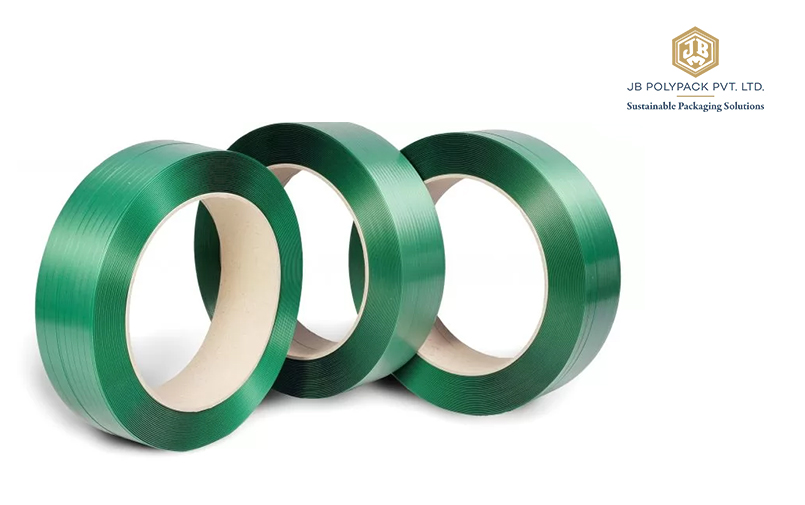
A PET strapping roll has its own set of numbers, and they decide whether the roll physically works in your operation before a single strap goes around a pallet. If you look at how published strap listings present a commercial specification, you will see the pattern: width, thickness, break strength, coil length, core dimensions, and surface finish, all on one line. That is the complete specification, and your purchase order should match it line for line.
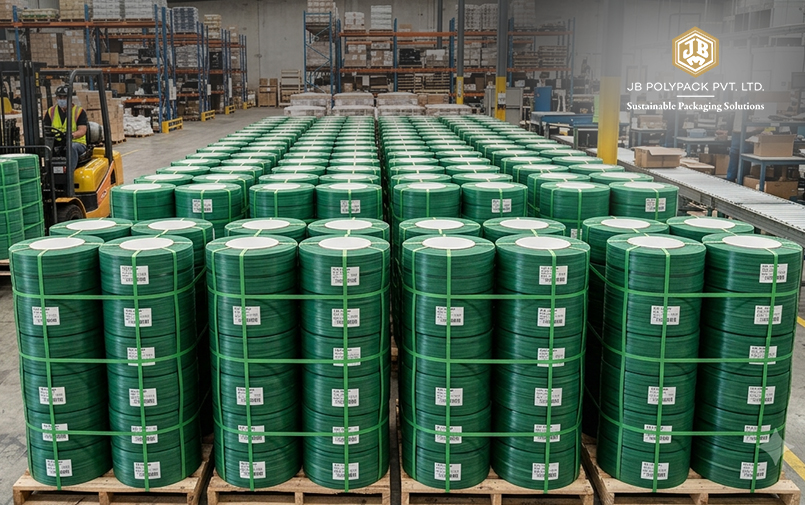
Core size must match your dispenser. Coil length determines changeover frequency on automatic machines, and fewer changeovers means more uptime. Surface finish, embossed or smooth, affects grip in the joint and feed behaviour through tooling. Winding quality decides whether the strap pays off cleanly or tangles at speed. None of these show up in a price per kilogram comparison, and all of them show up in your throughput. We supply against custom colours and sizes for exactly this reason, since a roll specified to your machine beats a stock roll specified to nobody.
Matching the Specification to the Job
An industrial PET strap for securing bricks does a different job from a PET packaging strap closing cartons, and the specification should move accordingly. Bale pressing in textiles runs at the heavy end of the strength range with wider straps, because compressed cotton pushes back hard and continuously. PET strap for pallet packaging in general logistics sits mid range, with multiple straps sharing the load. Appliance and electronics securing cares more about edge protection and controlled tension than raw strength.
The rule we give buyers is simple. Specify from the application backward. Load weight, load behaviour in transit, sealing method, and machine constraints come first, and the strap spec falls out of those. Buying the strongest roll on the price list solves a problem you probably do not have and leaves the joint problem, the tension problem, and the compatibility problem exactly where they were.
What to Ask Your PET Strap Manufacturer Before You Order
Whether you buy from us or from another PET strap manufacturer, walk in with this list:
- Width and thickness in millimetres, with tolerance, for the exact product quoted
- Breaking strength for that specific width and gauge, in newtons, from the datasheet rather than a brochure range
- Elongation at break, and the supplier’s view on tension retention for your load type
- Expected joint efficiency on your sealing method, weld or buckle
- Coil length, core dimensions, and surface finish matched to your dispensers and machines
- The testing standard the figures are declared against, with ASTM D3950 being the recognised specification for nonmetallic strapping and its joining methods
- Batch consistency: how the supplier verifies strength and gauge roll to roll
Our polyester PET strap specifications are declared per width and gauge, our straps are produced from recycled PET flakes, and we will put every figure above in writing before you commit to a container. If you want sample rolls to run on your own machines first, contact us with your widths, sealing method, and application and we will send material to test rather than a catalogue to read.
FAQs
What is the breaking strength of PET strap?
Breaking strength varies with width and thickness. Our production covers a range of 800 to 2200 N across widths of 12 mm to 25 mm. Always ask for the datasheet figure against the specific width and gauge you are ordering, since a range across a product family is not a specification for a purchase order.
What widths do PET straps come in?
Standard commercial widths are 12 mm, 16 mm, 19 mm, and 25 mm. Narrower straps suit carton bundling and lighter packages, while wider straps carry heavier loads and spread tension across soft package edges. Width must also match the window your strapping tools and machines are built for.
What does elongation mean in PET strap specifications?
Elongation is how much the strap stretches under load, typically 6 to 12 percent for polyester strap. It matters because the stretch and recovery keep tension on a load that settles or compresses during transit, which is the main performance advantage polyester holds over steel strapping.
How much weight can a PET strap hold?
The rated breaking strength is a laboratory figure for the strap alone. In service, capacity depends on the joint, the tension applied, the number of straps on the load, and transport dynamics. Sound practice works from a margin below the rated figure and uses multiple straps per pallet rather than loading any single strap to its limit.
What is the difference between PET strap and PP strap?
Both are plastic strapping, and the difference is performance class. Polyester strap holds higher breaking strengths, retains tension far longer, and handles heavy and settling loads that polypropylene cannot. PP remains a light duty option for low value carton closing where holding force over time is not critical.
What should a PET strapping roll specification include?
A complete roll specification lists width, thickness, breaking strength, elongation, coil length, core dimensions, and surface finish, plus the testing standard the figures are declared against. If a quote is missing any of those lines, ask for them before comparing prices.