PET Packaging Strap Explained: Benefits, Uses & Sustainability Impact
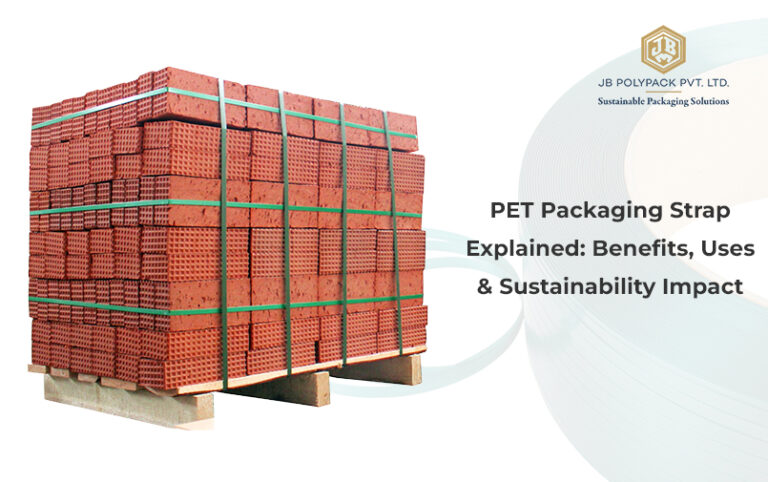
If you walk through a warehouse at 9 am, before the forklifts warm up and before the loading bays get noisy, you start noticing small things. Pallets stacked neatly. Cartons pulled tight. Bundles that look calm, secure, and ready to travel.
Most people look at the product on the pallet. People in packaging look at what’s holding it together.
That thin, strong band doing the quiet work is often a PET packaging strap. It does not announce itself. It does not look impressive at first glance. But anyone who has seen a shifted pallet halfway through transport knows how much depends on it.
At JB Polypack, we have spent years working with manufacturers, exporters, logistics teams, and plant managers who all ask the same thing in different ways. Will this strap hold? Will it behave the same in summer heat? Can it replace steel without creating new problems? Can it align with sustainability goals without compromising safety?
This guide exists to answer those questions clearly, practically, and honestly.
What Is a PET Packaging Strap and Why Industries Switched to It
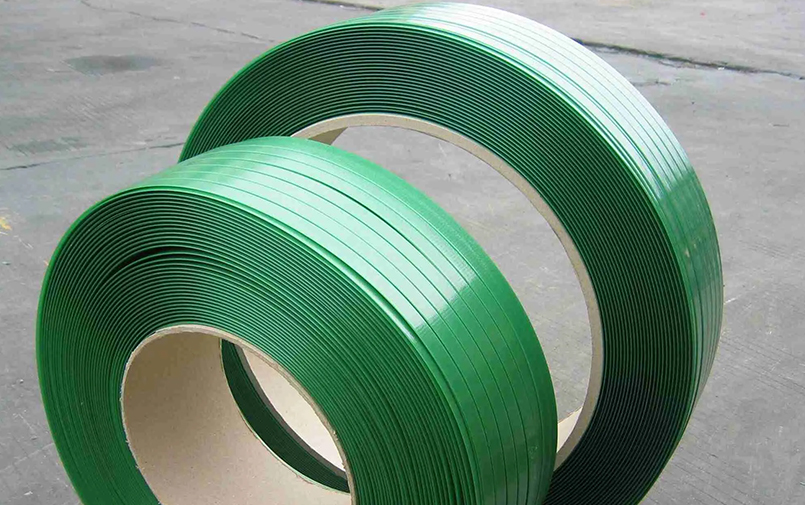
A PET packaging strap is a strapping solution manufactured from polyethylene terephthalate. In simpler terms, it is a high strength plastic strapping material designed to secure loads during storage and transportation.
What made industries pay attention to PET was not marketing. It was fatigue with older systems.
Steel strapping caused injuries, rust issues, and handling problems. Conventional plastic strapping struggled with tension retention and long-term load stability. PET stepped into that gap quietly and proved itself over time.
A PET strap behaves differently under stress. It stretches slightly, absorbs shock, and returns to form instead of snapping. This matters when goods move across uneven roads or sit in warehouses that experience temperature shifts.
Over time, manufacturers noticed fewer load failures, safer handling, and lower overall strapping costs. That is how adoption spread.
How PET Strap Works in Real Packaging Conditions
A PET packaging strap does not rely on rigidity alone. Its strength comes from controlled elongation and recovery.
When a pallet experiences vibration or impact, the strap stretches and absorbs the force instead of transferring it directly to the product. Once the stress passes, the strap recovers its tension.
This behavior makes plastic strapping made from PET especially suitable for long-distance transport, export shipments, and heavy loads that settle over time.
That is also why a PET packing belt performs better than many alternatives in automated and semi-automated strapping lines. Consistency matters more than brute force.
PET Strap vs Traditional Plastic Strapping
Not all plastic strapping performs the same way.
Polypropylene straps work well for light cartons and short-term bundling. Once loads become heavier or travel becomes longer, limitations show up.
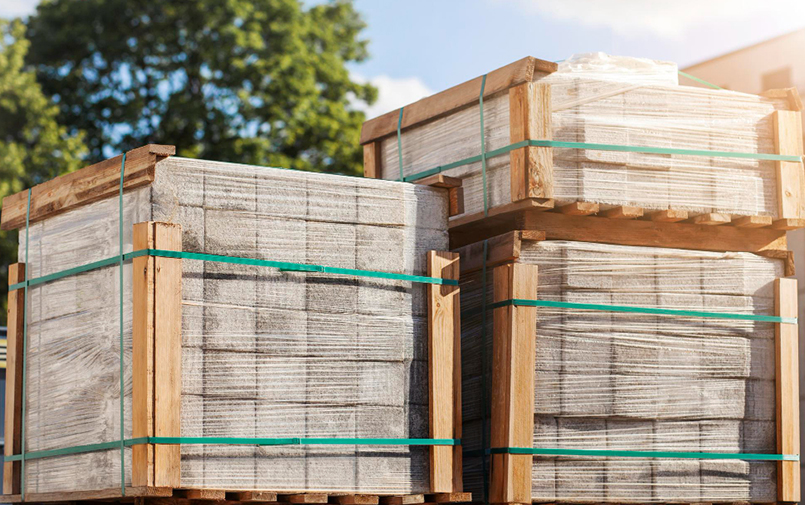
A PET strap maintains tension far better over time. It handles temperature variation. It resists moisture. It holds loads stable even after days or weeks in transit.
This is why industries handling bricks, tiles, cotton bales, lumber, metal coils, and FMCG pallet loads gradually moved toward polyester PET strap solutions.
Industries That Rely on PET Packaging Strap Every Day
A PET packaging strap rarely serves only one industry. Its value shows up wherever load integrity matters across industries.
Construction and Building Materials
Cement bags, bricks, ceramic tiles, and stone slabs demand strapping that can handle weight and shock. PET straps manage this without damaging product edges.
FMCG and Consumer Goods
Stacked cartons require uniform tension and safety during handling. PET straps integrate well with automated systems.
Textile and Cotton Bales
Load settling is common in textile transport. PET absorbs movement without slackening excessively.
Metal and Industrial Goods
Metal coils and pipes benefit from PET’s strength without the handling risks associated with steel.
Across these industries, PET packaging strap adoption happened through experience, not persuasion.
Understanding Green PET Strap and Sustainability Impact
Sustainability conversations in packaging often feel abstract. On the factory floor, sustainability shows up as material choices, waste streams, and compliance pressure.
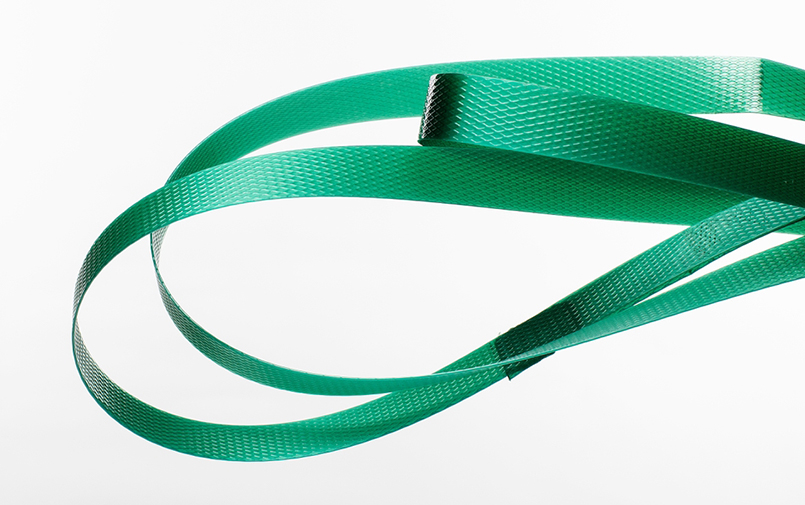
A green PET strap is produced using recycled PET material, often derived from post-consumer bottles. This creates a direct loop between waste recovery and industrial application.
Using recycled PET reduces dependency on virgin raw material. It lowers carbon footprint. It also supports Extended Producer Responsibility goals that many industries now operate under.
At JB Polypack, sustainability is not a label. It is a supply chain decision. Every green PET strap we manufacture aligns with traceable material sourcing and consistent mechanical performance.
Why Quality Standards Matter in PET Packaging Strap Manufacturing
Manufacturers using PET packaging strap often operate under strict internal quality audits and external compliance requirements. Consistency in strap dimensions, tensile strength, and elongation behavior directly affects load safety and machine efficiency.
Industry bodies such as the Plastics Industry Association and European PET Bottle Platform emphasize controlled manufacturing processes and traceability for PET-based industrial products. These principles also apply to plastic strapping used in high-load and export environments.
At JB Polypack, production parameters are monitored to maintain repeatable performance across batches. This helps customers avoid unexpected failures, machine stoppages, and transport damage.
PET Strapping and Circular Economy Systems
PET has one significant advantage over many materials. It can be recycled multiple times without severe degradation.
A PET packaging strap made from recycled PET can itself be recycled again after use, depending on collection and processing systems.
This places PET strapping firmly within circular economy frameworks. It supports material recovery instead of disposal.
For companies managing compliance, ESG reporting, or export documentation, this matters more each year.
Strength, Thickness, and Size Options in PET Packing Belt Manufacturing
One of the most common questions we receive is simple and direct. Can you make it to our specification?
The answer is yes, because a PET packing belt only works when it matches the load, application method, and operating environment.
At JB Polypack, we manufacture PET strapping in multiple widths, thicknesses, and tensile strengths. This allows us to serve both light duty and heavy industrial requirements.
Specifications typically vary based on:
- Load weight
- Strapping machine compatibility
- Manual or automatic application
- Required break strength
- Environmental exposure
A PET packaging strap that works perfectly for FMCG pallets may not suit steel coil bundling. Customisation is not optional. It is essential.
How JB Polypack Manufactures PET Packaging Strap for Real Industry Conditions
At JB Polypack, PET strapping is not treated as a generic packaging accessory. It is treated as a load-bearing component that must perform consistently across industries, machines, and environments.
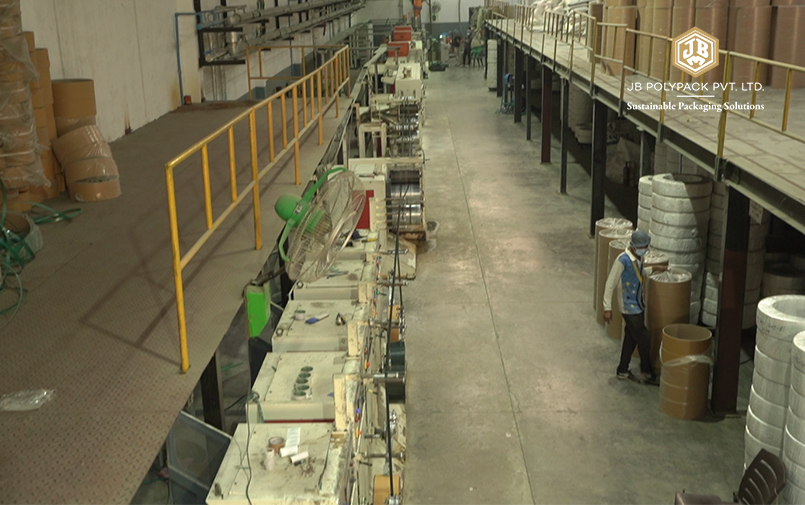
Our manufacturing setup allows us to produce PET packaging strap rolls in multiple widths, thicknesses, and tensile strength ranges based on application needs. This includes light-duty strapping for FMCG pallets as well as heavy-duty requirements for construction materials, metal products, and export cargo.
Each PET packing belt is manufactured using controlled extrusion and cooling processes to ensure uniform thickness and smooth edges. This consistency directly affects how the strap behaves during tensioning, sealing, and long-distance transport.
We also manufacture polyester PET strap variants using recycled PET raw material sourced through verified channels. This enables us to support customers looking for a reliable green PET strap solution without compromising mechanical performance.
JB Polypack works closely with customers to align strap specifications with strapping machines, handling practices, and load behavior. This practical alignment is what allows our PET packaging strap products to perform reliably on real shop floors, not just in specification sheets.
Consistency Matters More Than Maximum Strength
Many buyers focus on peak tensile strength numbers. Real performance depends on consistency.
A polyester PET strap must maintain uniform thickness, smooth edges, and controlled elongation. Variations lead to machine issues, uneven tension, and unexpected failures.
This is why manufacturing control matters. Raw material quality, extrusion calibration, and cooling processes directly affect field performance.
At JB Polypack, every PET strap batch is produced with strict monitoring because consistency keeps operations predictable.
PET Strap Compatibility with Strapping Machines
A PET strap interacts constantly with machinery. Poor compatibility causes downtime.
Our strapping rolls are designed to work with:
- Fully automatic strapping machines
- Semi-automatic systems
- Manual tensioning tools
Dimensional accuracy ensures smooth feeding and sealing. This reduces maintenance issues and operator frustration.
When a PET packaging strap runs cleanly through machines, production stays on schedule.
Safety Advantages of PET Strapping Over Steel
Workplace safety often improves quietly.
Unlike steel, PET does not snap back violently when cut. Edges remain smoother. Handling becomes less risky.
For teams strapping hundreds of pallets daily, these small improvements add up. Fewer injuries. Faster handling. Less fatigue.
This safety factor is one of the strongest reasons many plants never go back after switching to PET strap solutions.
But the advantages of PET strap roll over steel straps doesn’t end here.
Cost Efficiency Beyond the Per Roll Price
Looking only at purchase price misses the full picture.
A PET packaging strap often replaces steel at lower weight and similar strength. Transportation costs drop. Handling improves. Waste disposal becomes easier.
Long-term savings show up in reduced damage, fewer injuries, and smoother operations.
This is why procurement teams increasingly evaluate total cost of ownership instead of unit cost alone.
PET Packaging Strap and Export Readiness
Export shipments introduce complexity. Long transit times. Variable climates. Multiple handling points.
A PET packaging strap performs reliably across these conditions. It resists moisture. It tolerates heat variation. It maintains tension over long durations.
Exporters value predictability more than anything else. PET provides it.
Why Manufacturers Choose JB Polypack for PET Strap Supply
At JB Polypack, we do not treat PET strapping as a commodity. We treat it as a performance component.
Our approach combines:
- Recycled PET sourcing expertise
- Controlled manufacturing processes
- Custom size and thickness capability
- Industry-specific understanding
Every PET packaging strap we supply reflects real use cases, not theoretical standards.
Common Buyer Questions About PET Strap Answered
How long does PET strapping last in storage
Properly stored PET straps retain performance for extended periods without degradation.
Can PET strap replace steel for heavy loads
Yes, when specified correctly for width and thickness.
Is green PET strap as strong as virgin material
When processed correctly, recycled PET delivers consistent strength suitable for industrial use.
Does PET strap work outdoors
PET handles moisture and temperature variation effectively.
These questions come from real buyers, not search tools. We answer them because we encounter them daily.
PET Packaging Strap as a Long Term Packaging Decision
Choosing a PET packaging strap is rarely a one-time decision. Once systems adapt and teams gain confidence, it becomes part of standard operations.
It supports safety, sustainability, and reliability without demanding attention.
That is the quiet success of PET strapping.
How to Choose the Right PET Strap for Your Application
Before finalizing a PET strap, buyers should evaluate:
- Load weight and pallet configuration
- Required strap width and thickness
- Manual or machine strapping method
- Storage and transport conditions
- Sustainability or recycled material preferences
Selecting the correct PET packaging strap based on these factors improves load stability and reduces long-term operational issues.
Thoughts from the Factory Floor
If packaging fails, nothing else matters. Product quality, branding, logistics planning all become irrelevant when loads shift or break.
A PET packaging strap does not seek attention. It earns trust through performance.
At JB Polypack, our role is simple. Make sure the strap does its job every single time.
That is how industries move forward, one secured pallet at a time.
Frequently Asked Questions About PET Packaging Strap
What is a PET packaging strap used for?
A PET packaging strap is used to secure pallets, bundles, and heavy loads during storage and transportation across industries such as FMCG, construction, textiles, and metals.
Is PET strap stronger than other plastic strapping options?
A PET strap offers higher tensile strength and better tension retention compared to many conventional plastic strapping materials.
Can green PET strap be used for heavy industrial loads?
Yes, a properly manufactured green PET strap made from recycled PET can deliver reliable strength for many industrial applications.
Does PET packing belt work with automatic strapping machines?
A PET packing belt manufactured with consistent dimensions works well with automatic and semi-automatic strapping machines.
Is PET strap suitable for export shipments?
PET strap performs well in export conditions due to its resistance to moisture, temperature variation, and load movement.